

In old Sicily, making bread was much more than just a domestic task: it was a daily ritual, a moment of sharing and tradition that marked the passing of the day. It all began at dawn, when homes filled with life and the silence of the night gave way to the first skilled gestures.
The heart of this ritual was the maidda, a large wooden kneading trough that represented the center of the preparation. Every family owned one, often passed down from generation to generation, marked by time and use.
The Maidda: Guardian of Tradition
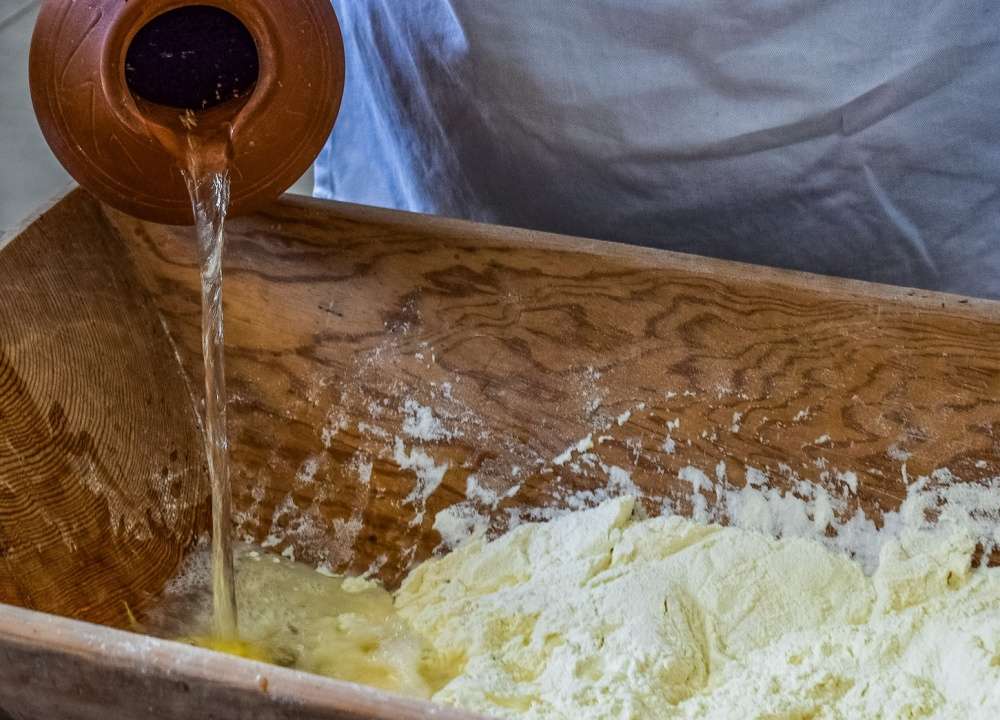
The maidda was not just a container, but a fundamental tool. Inside, semolina flour was poured, forming the classic well. It was here that the dough came to life, and here that skilled hands began their work.
The wood of the maidda retained heat and helped the dough to develop in the right way. Every scratch told stories of years of labor, every mark kept a family memory.
Simple Ingredients, Authentic Flavors
The ingredients were few and genuine: flour, water, salt, and sourdough. The latter was considered a true household treasure, kept alive with care and attention.
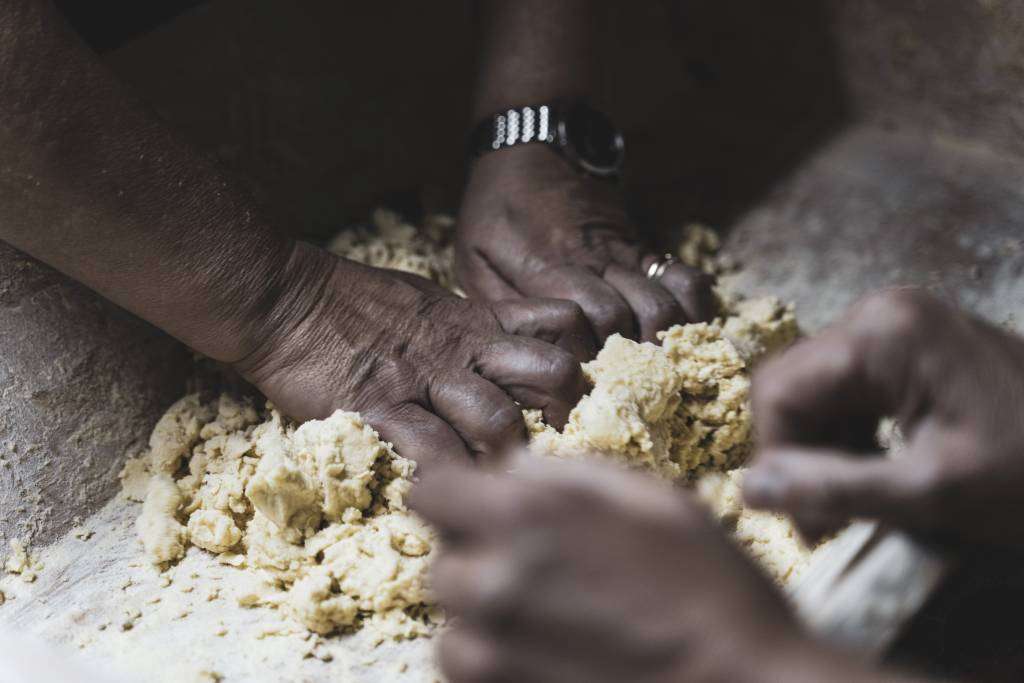
It was dissolved in water and then slowly incorporated into the flour in the maidda. At that point, the kneading began: energetic, continuous, almost hypnotic. The hands moved with confidence, folding and working the dough until it became smooth and elastic.
The Time for Rising
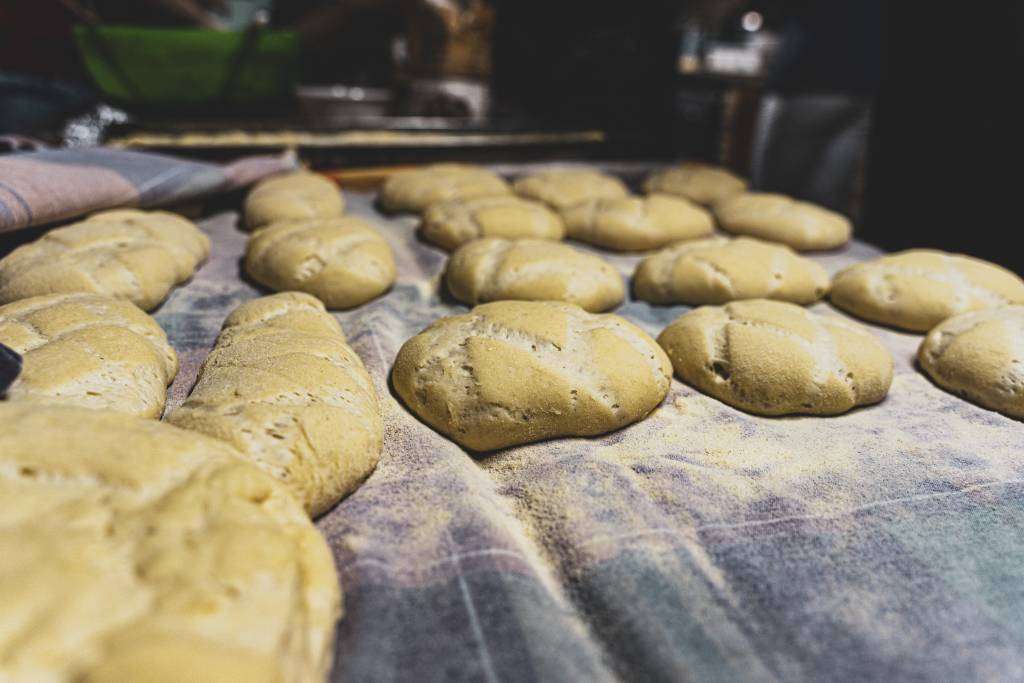
Once ready, the dough was left to rest directly in the maidda. Covered with heavy cloths or blankets, it was protected from drafts and left to rise slowly.
It was a moment of respectful waiting, where haste had no place. Around it, life continued: other foods were prepared, the house was cared for, conversations took place. But always with one eye on the dough that was rising.
The Wood-Fired Oven and the Peasant Knowledge
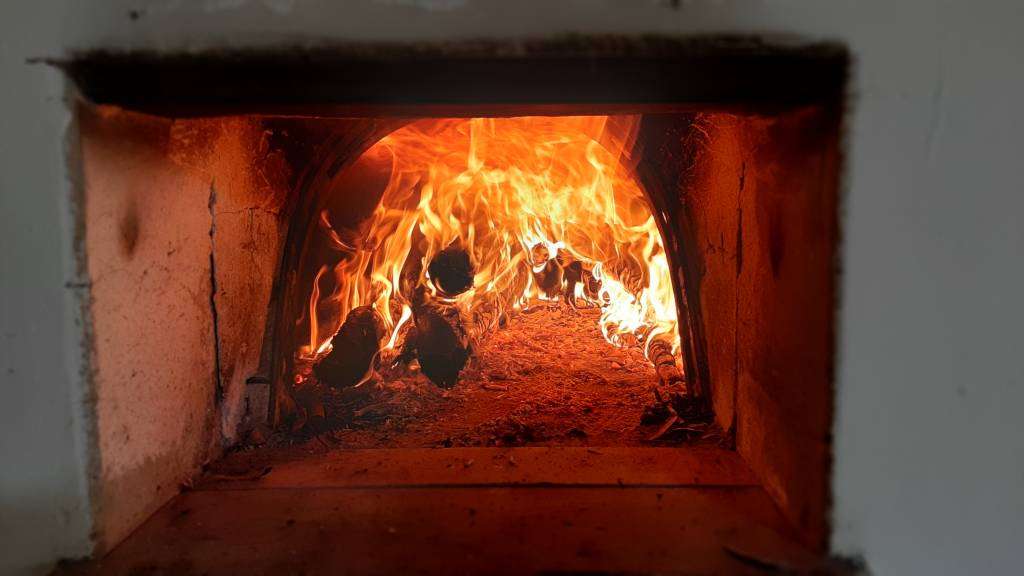
In the meantime, the wood-fired oven was lit. Dry branches and bundles were used until the ideal temperature was reached. The women, with great experience, knew when the oven was ready simply by observing the color of the stones or feeling the heat with their hands.
The ashes were then moved, and the oven cleaned with care, ready to welcome the loaves.
The Shapes of Bread and the Marks of Faith
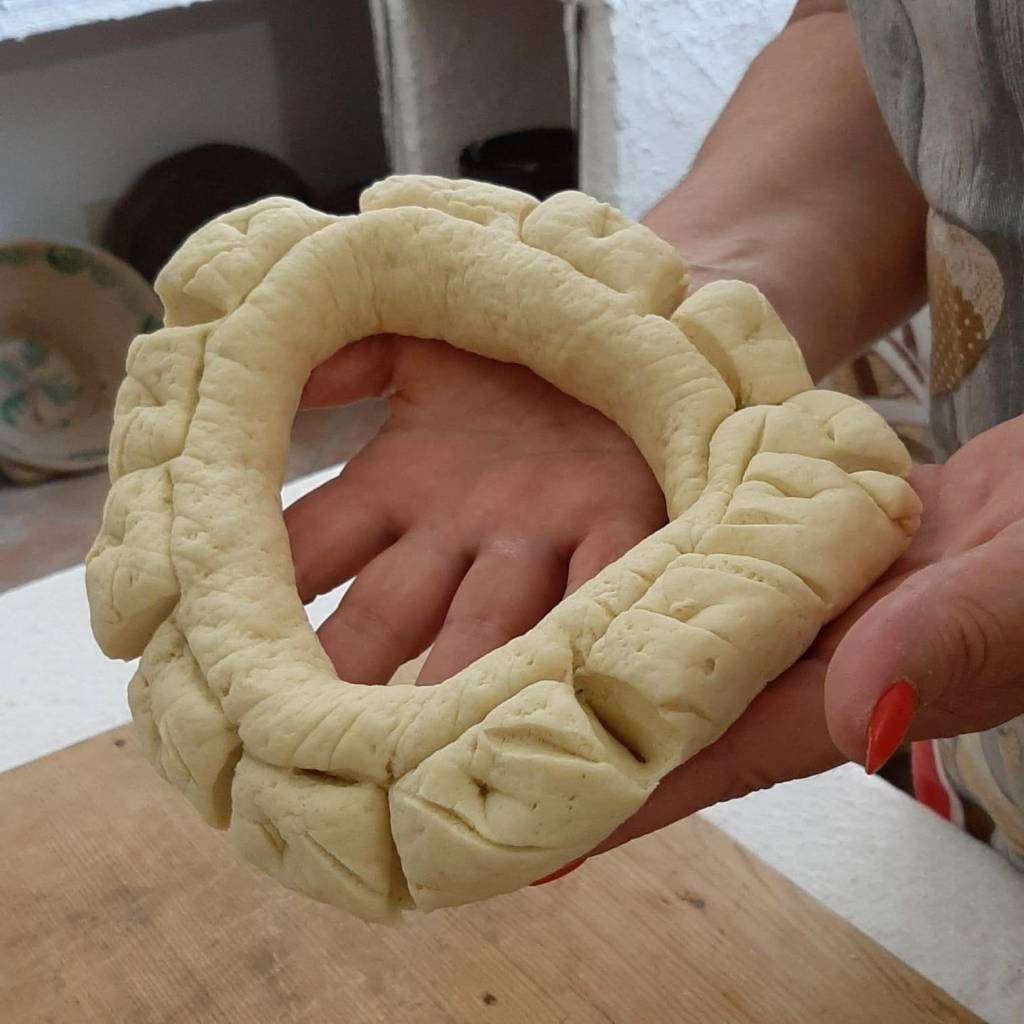
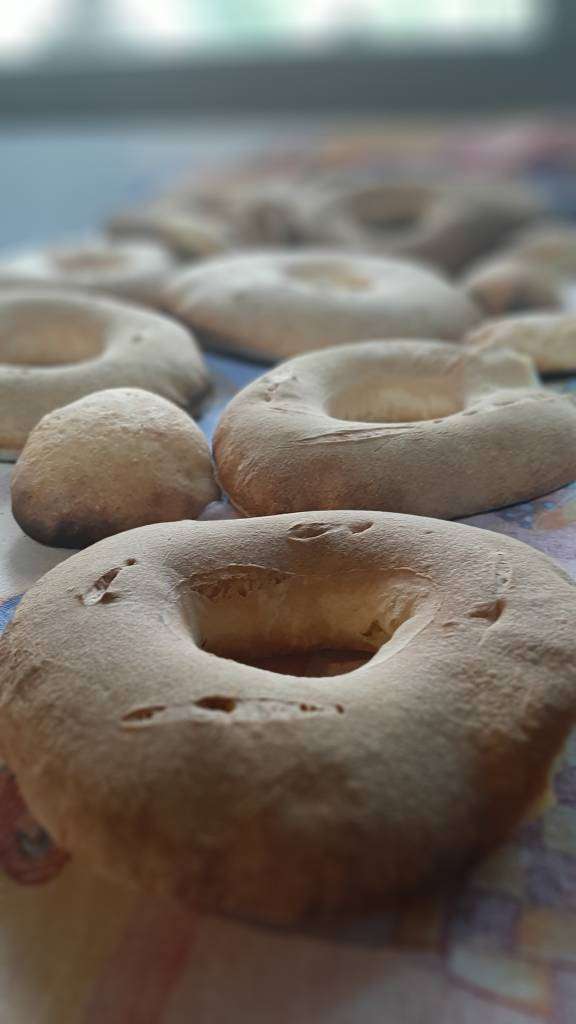
The risen dough was divided and shaped once again in the maidda. The shapes were large, round, rustic. Before being baked, a cross was often carved on the surface: a simple gesture, but one full of meaning, a symbol of protection and blessing.
Each family had its own shapes and distinctive marks, small details that spoke of identity and belonging.
The Aroma that Tells the Story of Sicily
When the loaves entered the oven, one of the most emotional moments began. After a short time, the smell of freshly baked bread would spread through the air, crossing the streets and reaching the neighboring houses.
It was an intense and unmistakable aroma, capable of uniting an entire village. Often, the oven was shared with other families, turning bread-making into a communal moment.
An Experience to Live Today
Even today, in some authentic corners of Sicily, it is possible to witness this ancient ritual. Seeing a maidda in use, watching hands knead, and smelling the bread baking in a wood-fired oven means taking a journey back in time.
For the traveler, it’s not just a tasting, but a deep cultural experience. It’s a way to connect with the truest soul of the island, made of simplicity, tradition, and gestures that have never been lost.
More curiosities

Alia and Borgo Sant’Ambrogio, between the land of “ghiuttena” and the Village of olive trees

Ragusa between nature, history, traditions and delights
